%201.png)

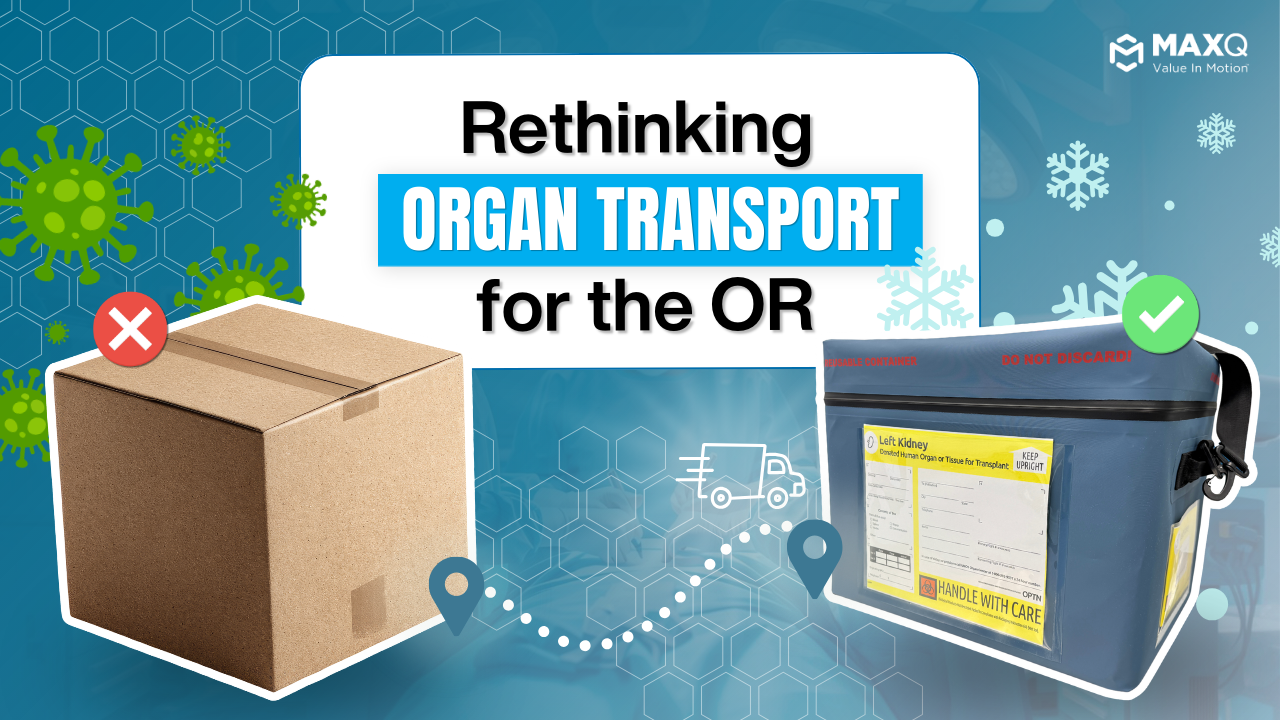
When a donor organ leaves the donor hospital, it is often transported inside a cardboard-and-Styrofoam shipping container. These cardboard containers & the styrofoam inside thereof have passed through warehouses, loading docks, delivery trucks, and airport cargo holds before entering the transplant center. Essentially, several areas and touchpoints that are neither sterile nor as clean. These corrugated cardboard styrofoam containers are not designed for OR use either. The Joint Commission explicitly notes that shipping containers, especially those made of corrugated material, “serve as generators of and reservoirs for dust” and that corrugated cardboard boxes are susceptible to moisture, vermin, and bacteria during storage and transport, with the potential for “unknown and potentially high microbial contamination.” [1]
Current infection prevention frameworks emphasize removing supplies from external cardboard shipping containers before they enter sterile storage or restricted surgical areas (for example, AAMI ST79 and AORN policies advise removing supplies from outer shipping cartons and web-edged cardboard before transfer into sterile storage and perioperative spaces). When these same high-risk cardboard and Styrofoam organ shippers are wheeled into pre-op, the OR core, or the transplant OR itself, they introduce a known reservoir of dust and microbial contamination into the most vulnerable environment: the space where an ischemic, immunosuppressed patient is about to receive a life-saving graft. From an infection-prevention and quality standpoint, organ transport systems should be treated as sensitive / medical-grade entering a restricted area—enclosed in non-porous, cleanable surfaces and validated to support both temperature control and contamination control—not as repurposed outer shipping boxes.
At MaxQ, we designed LifeSafe to address this problem. LifeSafe uses a rigid, non-porous, cleanable outer shell and advanced insulation to maintain validated temperature performance while reducing the bioburden risks associated with corrugated shipping cartons. It has already safely supported the transport of more than 75 abdominal organs (kidneys and livers) in real-world clinical use. If you are interested in reviewing your current organ transport workflow or learning more about how LifeSafe can help align your process with modern infection-prevention principles, please reach out to our team.
Reference:


Efficient Solutions, Exceptional Results.